How to stop puppy biting
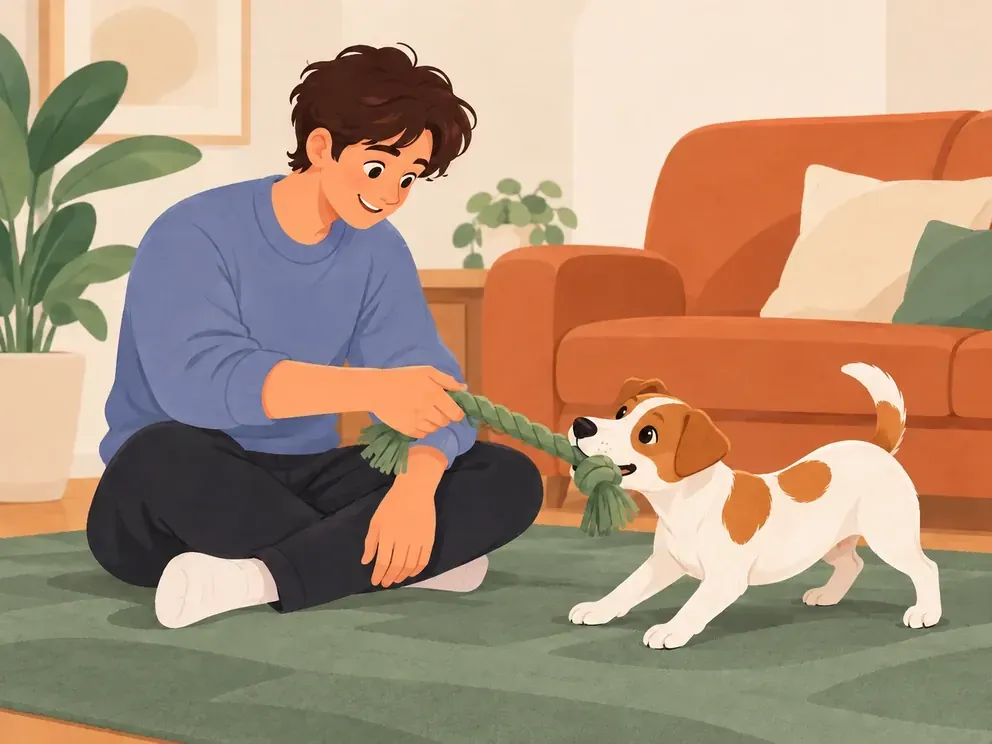
Why puppies bite, what to do in the moment, and a week by week plan to teach a soft mouth with rewards. Plus what to avoid and when to get help.
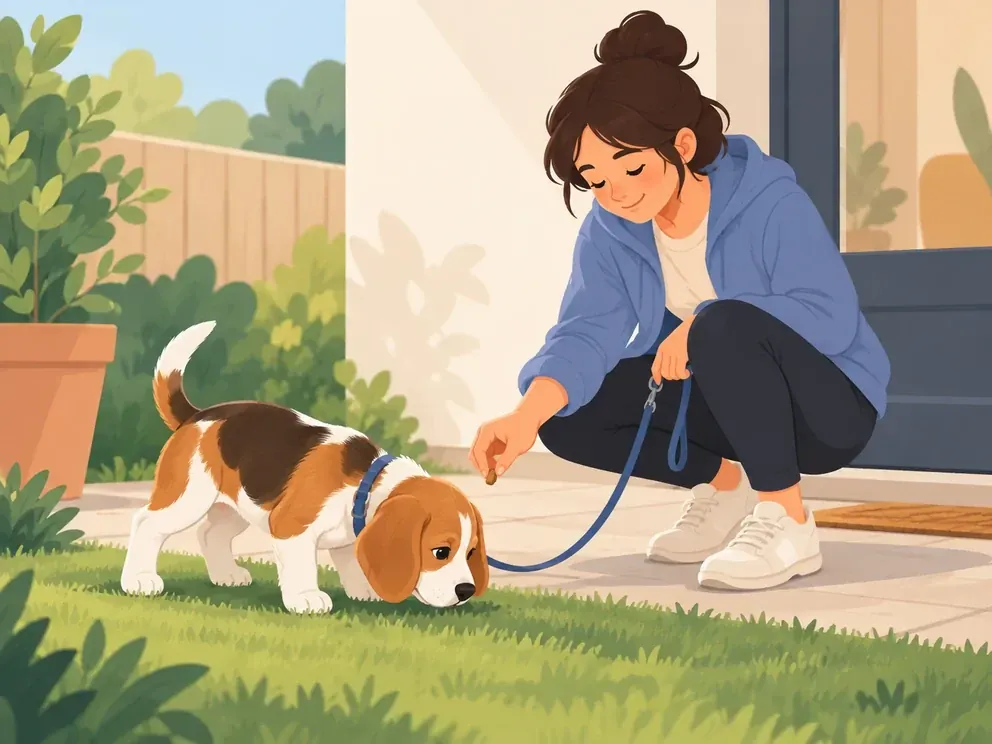
Biting, accidents, crying at night and a tiny brain that wants to learn everything at once. Here is how to train a puppy, one week at a time.
Why puppies bite, what to do in the moment, and a week by week plan to teach a soft mouth with rewards. Plus what to avoid and when to get help.
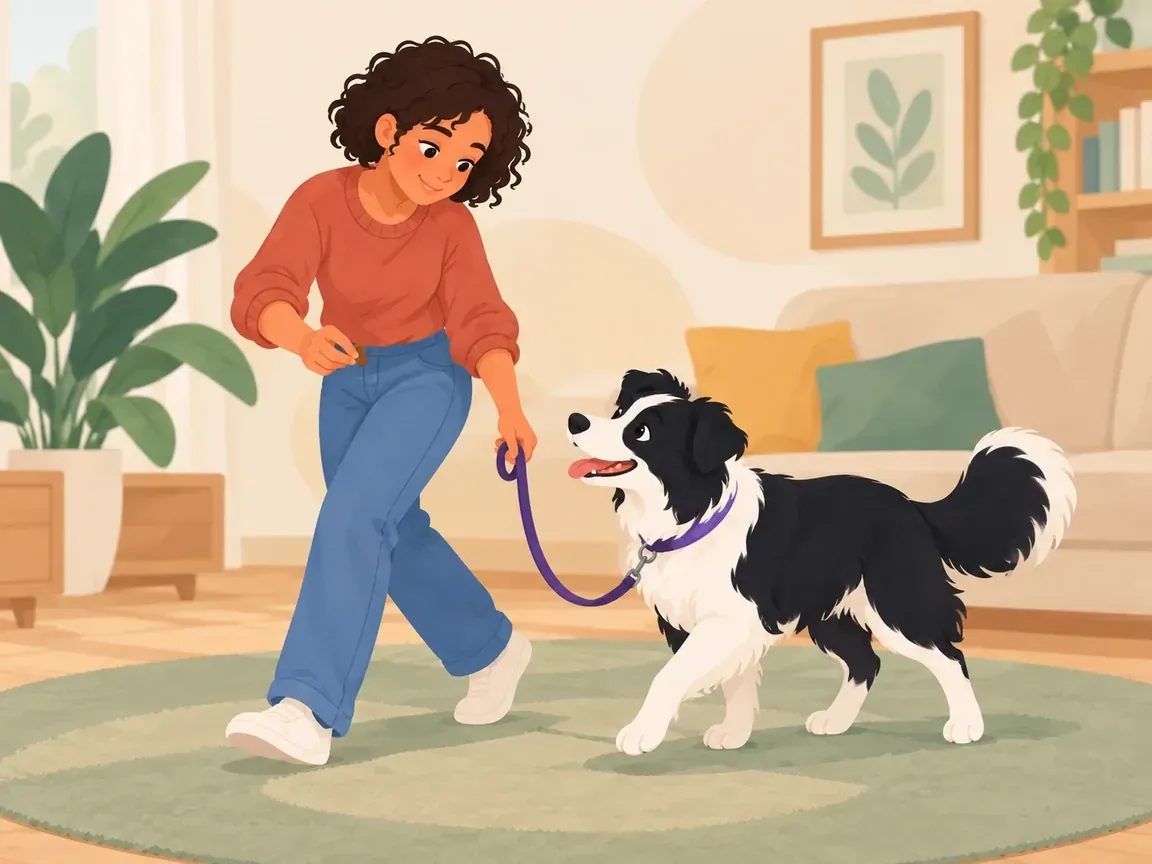
How to leash train a puppy: getting used to the collar or harness, first walks indoors, loose leash basics and how long puppy walks should be.
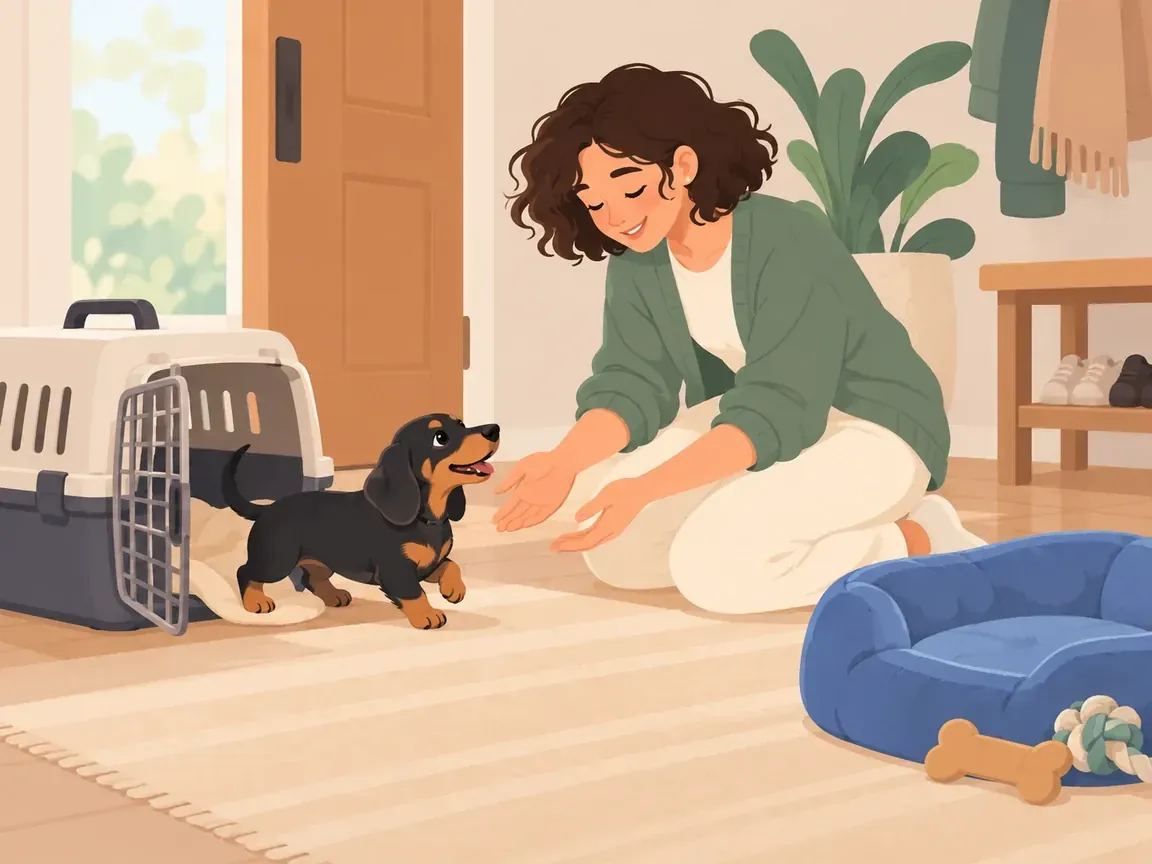
The first days are about safety, sleep and routine, not obedience. Set up a quiet corner with a crate or pen, keep visitors few, and take your puppy out to potty often. See your puppy’s first week for a checklist.
Most puppy struggles come down to five topics. Each has a full guide:
The first three months are when a puppy’s curiosity outweighs fear. What they meet calmly in that time tends to feel normal for life. The American Veterinary Society of Animal Behavior recommends that puppies get safe socialization before they are fully vaccinated, and says puppy classes can start as early as 7 to 8 weeks, after a first set of vaccines at least 7 days before and a first deworming.
Quality beats quantity: one calm, positive meeting with a person in a hat is worth more than a crowded street that overwhelms your puppy.
Short, playful sessions of a minute or two:
| Age | Focus |
|---|---|
| 8–10 weeks | Settling in, potty routine, name, gentle handling, calm socialization |
| 10–12 weeks | Sit, down, recall games, short car trips, meeting friendly vaccinated dogs |
| 3–4 months | Leash walking, leave it, longer alone time, teething chews |
| 4–6 months | Real world practice, stays, polite greetings |
| 6–18 months | The teenage phase: patience, exercise and back to basics |
Every puppy is different. Use this as a rough map, not a schedule to worry about.
Somewhere around six months, many good puppies seem to forget everything. It’s normal, and it passes. Keep training short, add exercise and brain games, and go back a step when you need to. See our program for the teen phase.
The day they come home. Around 8 weeks old, puppies can already learn their name, a marker word, sit and the start of house training. Keep sessions to a minute or two.
Many puppies are mostly reliable by 4 to 6 months, but it varies a lot by puppy, breed and routine. Accidents along the way are normal.
Ask your vet about your area. Veterinary behavior experts recommend safe socialization before vaccinations are complete, because the first three months are the key window. Avoid places where unknown dogs gather, like dog parks.
Yes. Mouthing is how puppies explore and play. Your job is to teach a soft mouth and give them better things to bite. See our guide to stopping puppy biting.