Crate training a puppy, step by step
A crate should feel like a safe den, never a punishment. Here's how to build that feeling a few minutes at a time.
 By Pawfessor Editorial TeamPublished 1 min read
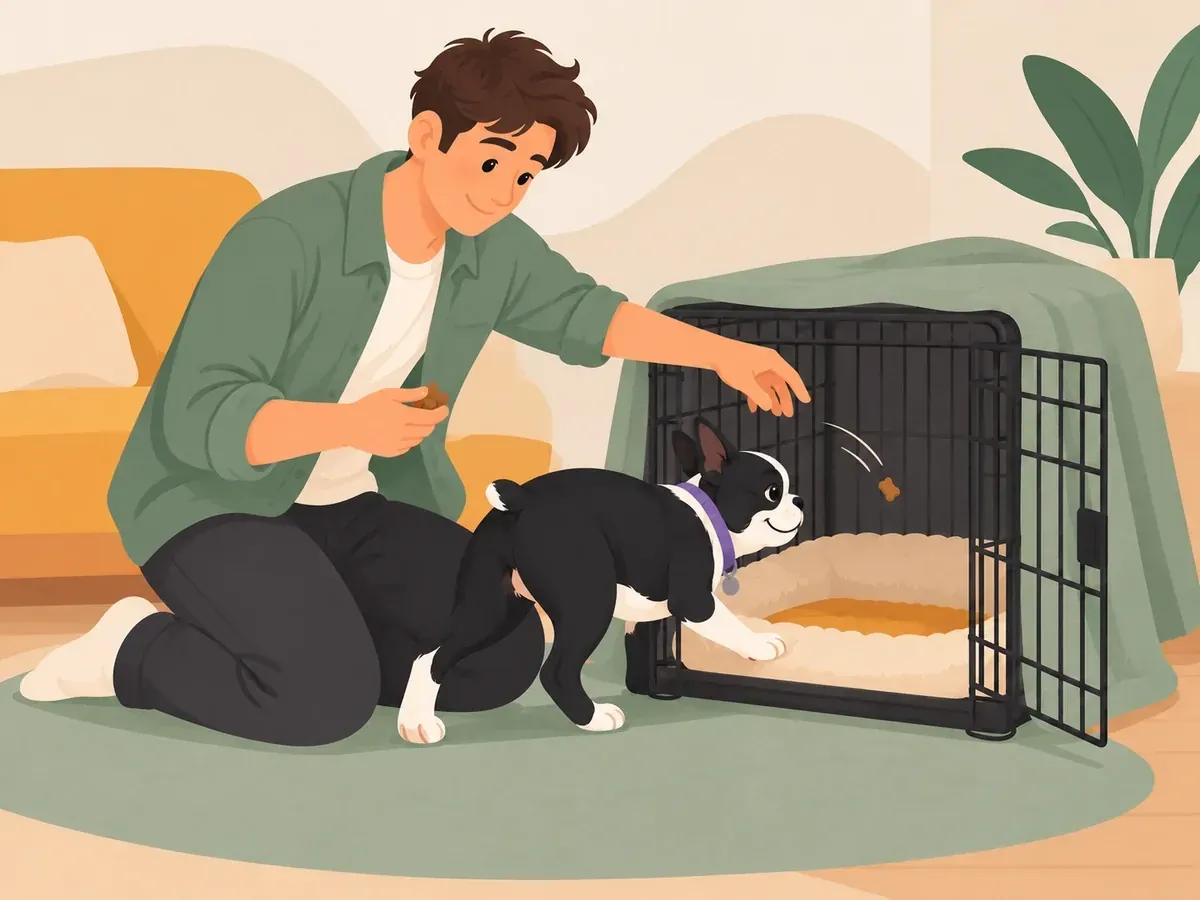
A well trained crate gives your puppy a safe place to sleep, helps with potty training and keeps them out of trouble while you can’t watch. The key is going slowly enough that your puppy never learns to dread it.
Choosing a crate
Big enough for your dog to stand, turn around and lie stretched out. Too big, and a puppy may use one end as a toilet: many crates come with a divider you can move as they grow. Put it somewhere your puppy can still see or hear the family.
Frequently asked questions
How long can a puppy stay in a crate?
During the day, not longer than they can hold their bladder: a rough guide is their age in months plus one, in hours, and much less for very young puppies. Adult dogs need plenty of time out for exercise and company too.
Should I put a blanket over the crate?
Many dogs like a covered crate because it feels den-like. Leave the front open for air, and watch that it doesn't get too warm.
Is crate training cruel?
Not when it's done gradually and the crate is used for rest, not punishment or long confinement. Many dogs choose to nap in their crate with the door open.
Pawfessor programs for this
Keep reading
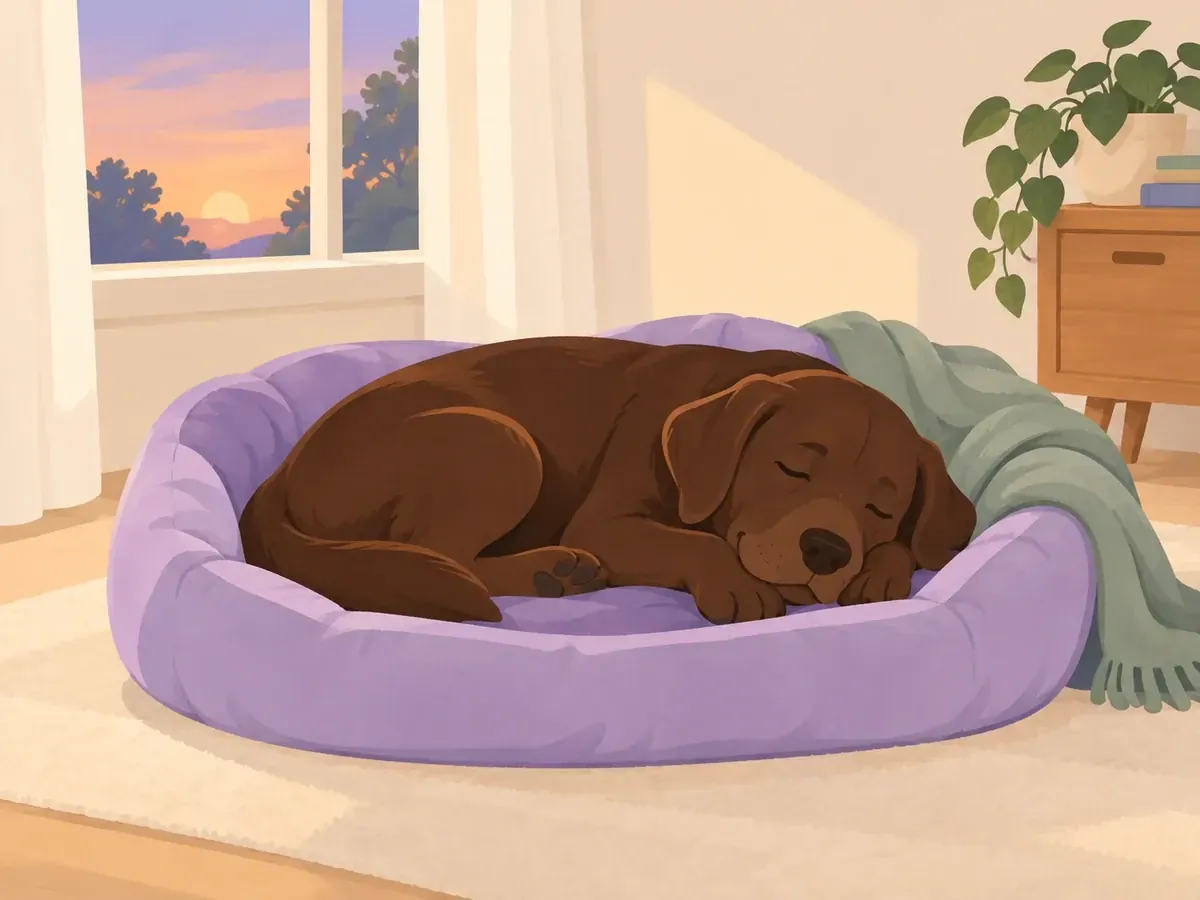
How much should a puppy sleep?
How many hours puppies sleep, why overtired puppies get bitey, how to set up naps and how to get through the first nights.
How to potty train a puppy
A step by step potty training schedule for puppies: when to take them out, how to reward, night breaks and what to do after an accident.

How to stop puppy biting
Why puppies bite, what to do in the moment, and a week by week plan to teach a soft mouth with rewards. Plus what to avoid and when to get help.