Heatstroke in Dogs: Signs and What to Do Right Now
Heavy panting, drooling, bright red gums, wobbling or collapse.
 By Pawfessor Editorial Team Reviewed by a veterinarianUpdated
On this page
Emergency: go to a vet now. Do these steps on the way to the vet, or while someone else calls ahead.
Heatstroke is an emergency. Dogs cool themselves mainly by panting, which doesn’t work well in heat, humidity or a closed car. It can happen fast, even on days that don’t feel very hot to you.
Start cooling your dog and get to a vet at the same time: call ahead so the clinic is ready.
To prevent it: walk early and late in summer, carry water, give shade, and skip hard exercise on warm days, especially for flat-faced breeds. See hot weather safety.
Cool them down
- Move them into the shade or a cool room
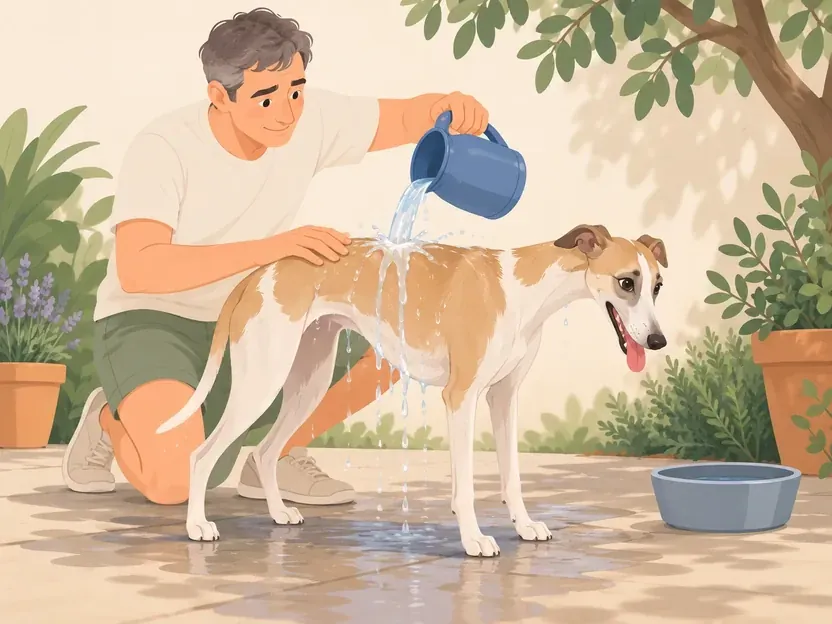
- Pour cool (not ice-cold) water over them, especially the belly and paws
- Put them in front of a fan or a breeze
- Let them drink small amounts of cool water
- Keep cooling on the way to the vet
Don't
- Use ice or ice-cold water: it slows cooling by closing blood vessels
- Cover them with a wet towel: it traps the heat
Prevent it
- Walk early and late on hot days
- Never leave a dog in a car, even with the windows open
- Flat-faced breeds overheat fastest
Frequently asked questions
Which dogs are most at risk of heatstroke?
Flat-faced breeds like French Bulldogs and Pugs, overweight dogs, very young and old dogs, thick-coated breeds and dogs with heart or breathing problems.
Should I use ice to cool my dog?
No. Use cool, not ice-cold, water. Very cold water can slow cooling by narrowing blood vessels in the skin.
Sources and further reading
- Warm weather pet safety. American Veterinary Medical Association (AVMA).
- Hot Weather Safety Tips. ASPCA.
Pawfessor programs for this
Keep reading

Puppy proofing your home
A room by room checklist to puppy proof your home: kitchen, living room, bathroom, garage and yard, plus the household items that are toxic to dogs.
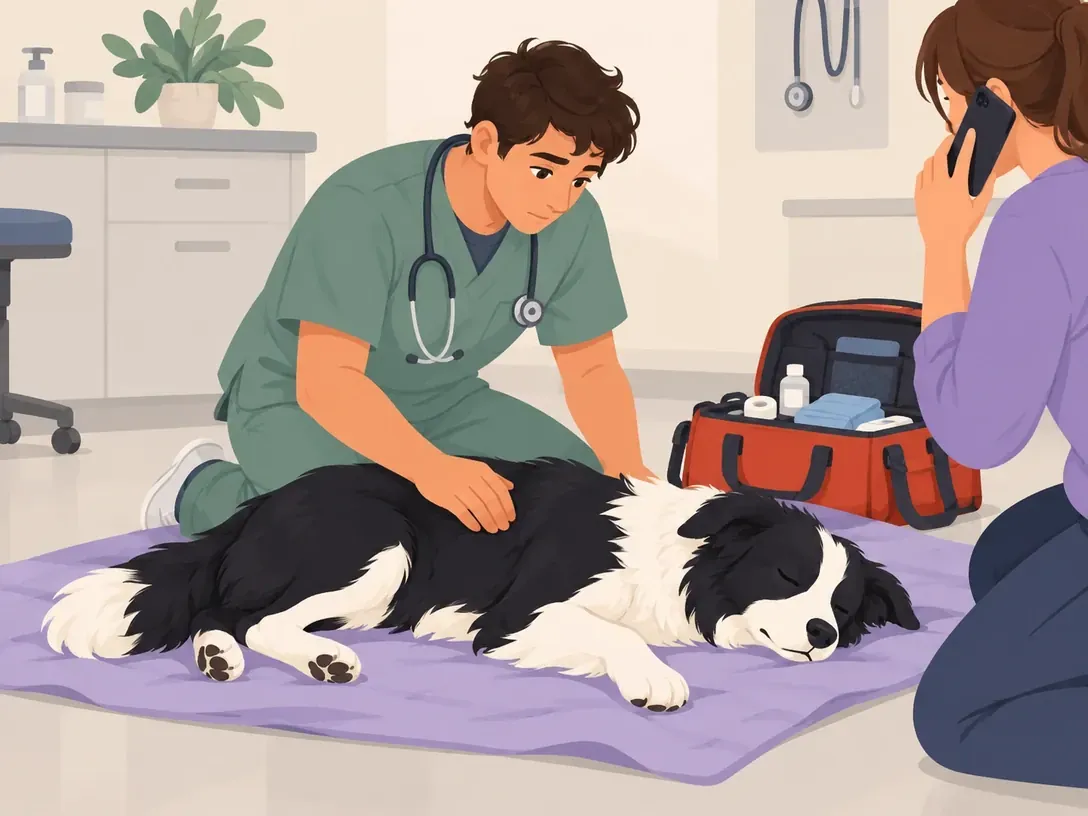
CPR
If your dog isn't breathing and has no heartbeat.
Choking
Pawing at the mouth, gagging, blue gums, panic.