Dog CPR: Step by Step
If your dog isn't breathing and has no heartbeat.
 By Pawfessor Editorial Team Reviewed by a veterinarianUpdated
On this page
Emergency: go to a vet now. Do these steps on the way to the vet, or while someone else calls ahead.
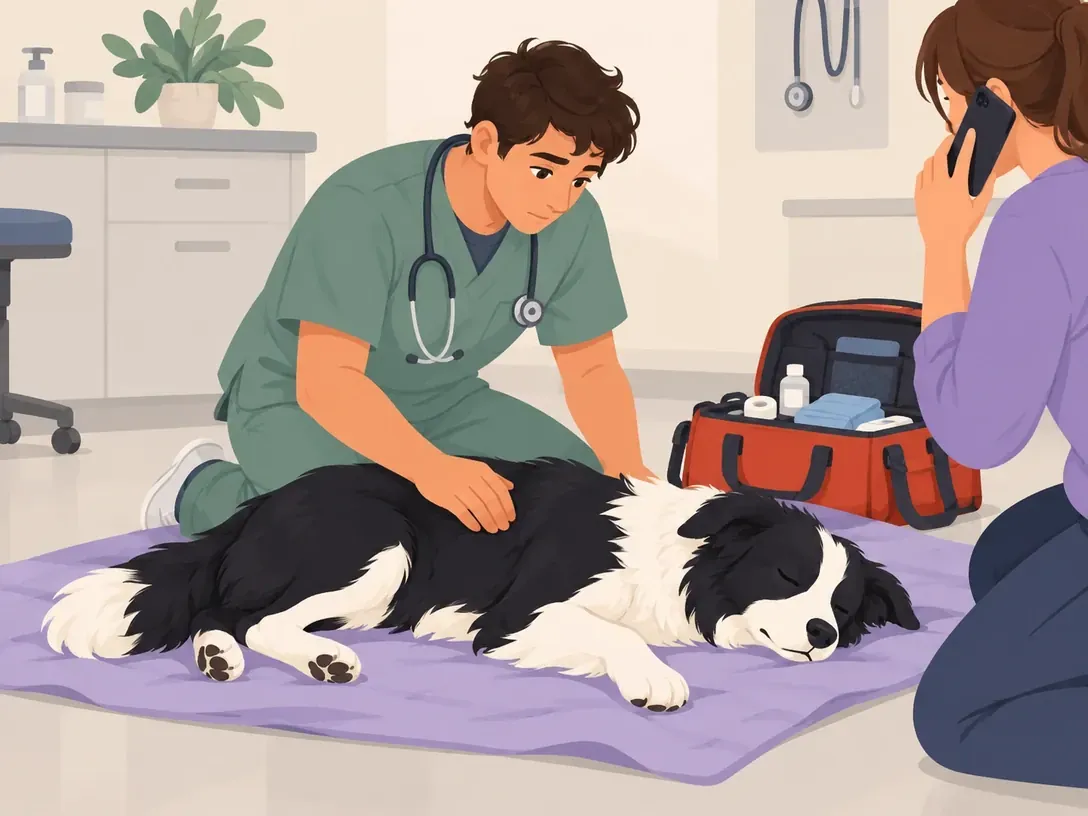
CPR can keep oxygen flowing to the brain until you reach a vet. If someone is with you, one person starts CPR while the other calls the nearest clinic and drives. Read these steps now, while your dog is healthy, so you’re not reading them for the first time in an emergency.
Check first
- Call their name and gently touch them
- Look for the chest rising and feel for breath at the nose
- Feel for a heartbeat on the left side of the chest, behind the elbow
- Ask someone to call the nearest vet while you start
Chest compressions
- Lay them on their right side on a firm surface
- Large dogs: place both hands on the widest part of the chest
- Small dogs and cats: squeeze the chest with one hand wrapped around it
- Press down a third to a half of the chest width, 100–120 times a minute
- Let the chest come fully back up between presses
Rescue breaths
- After 30 compressions, close the mouth and hold it shut
- Breathe into the nose until you see the chest rise
- Give 2 breaths, then back to 30 compressions
- Check for breathing every 2 minutes; keep going on the way to the vet
Frequently asked questions
When should I start CPR on a dog?
Only if your dog is unconscious, not breathing and has no heartbeat. Check first, call for help and start straight away if needed.
Pawfessor programs for this
Keep reading

Puppy proofing your home
A room by room checklist to puppy proof your home: kitchen, living room, bathroom, garage and yard, plus the household items that are toxic to dogs.
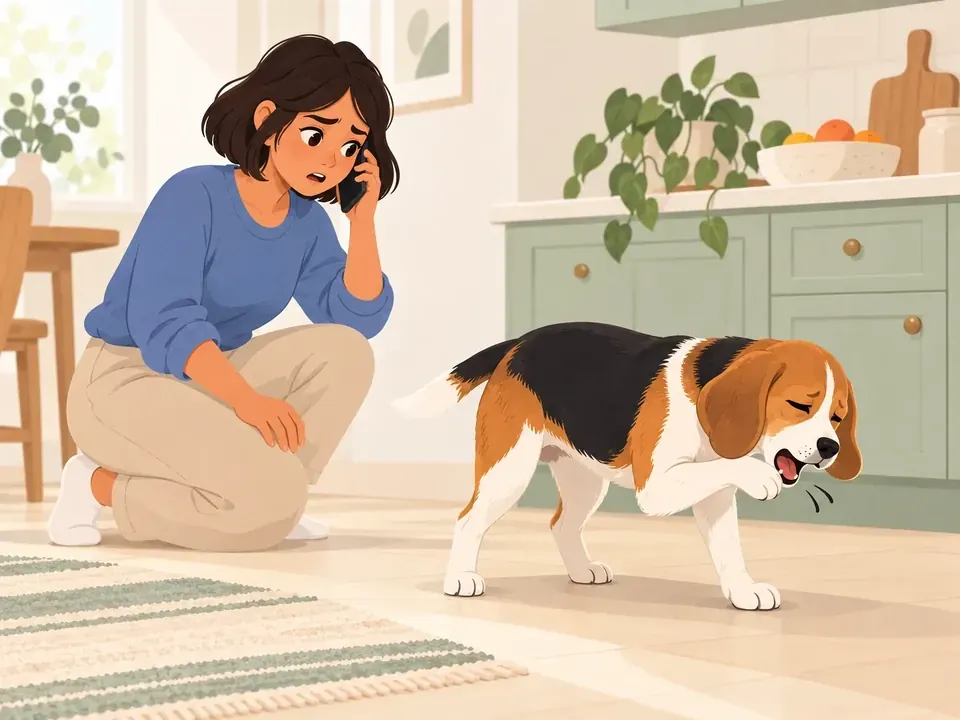
Choking
Pawing at the mouth, gagging, blue gums, panic.
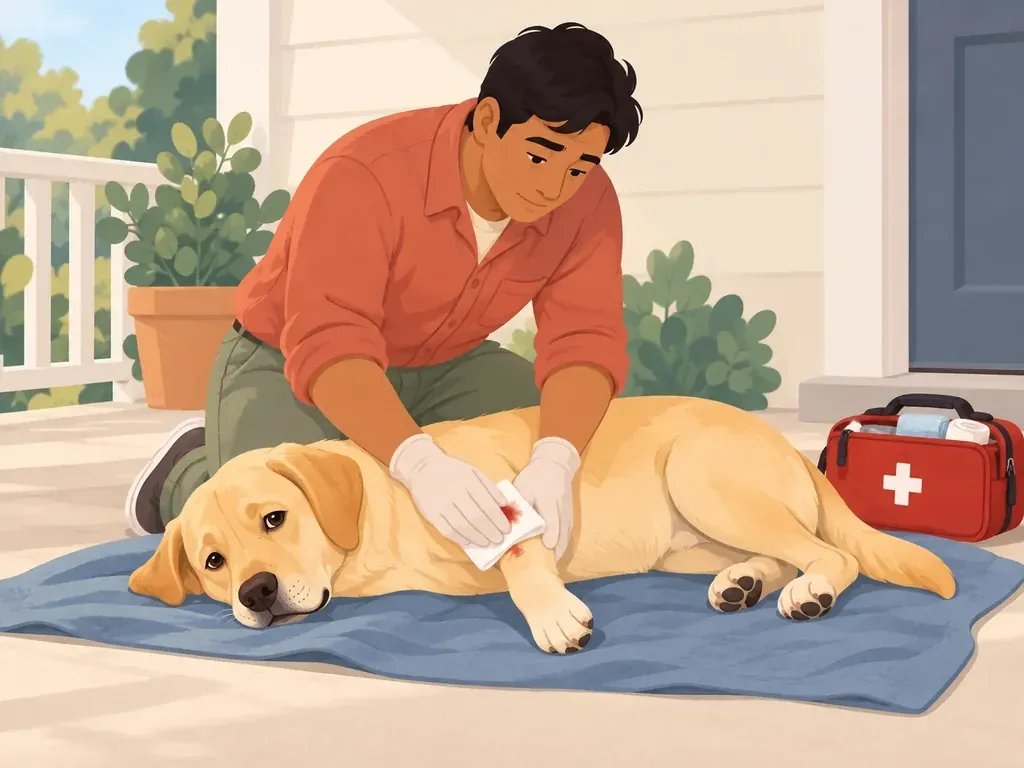
Heavy Bleeding
Blood spurting or pooling from a wound.