Bloat (GDV) in Dogs: Signs and Why It's an Emergency
Swollen belly, retching with nothing coming up, restlessness.
 By Pawfessor Editorial Team Reviewed by a veterinarianUpdated
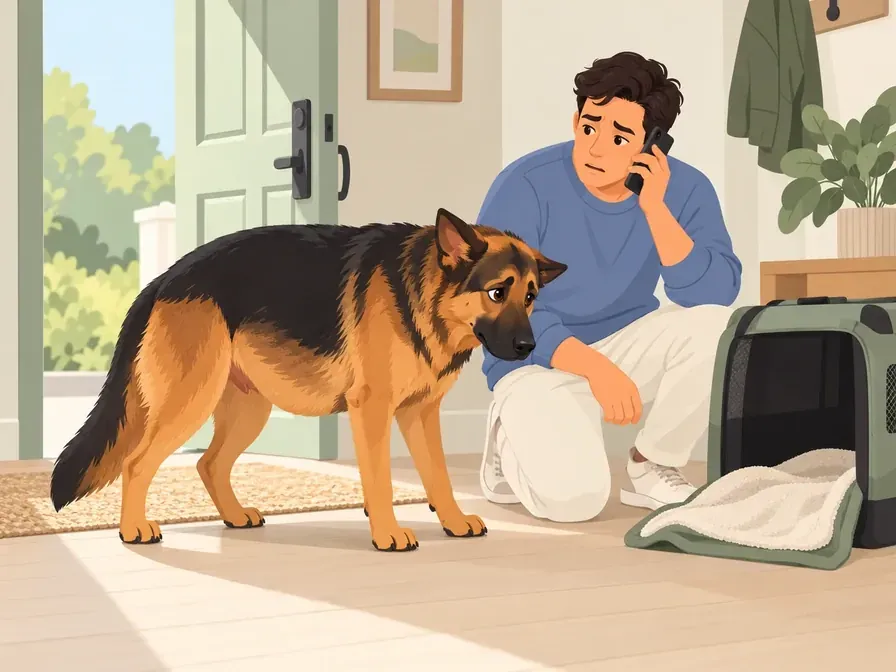
Emergency: go to a vet now. Do these steps on the way to the vet, or while someone else calls ahead.
Bloat happens when the stomach fills with gas. In gastric dilatation volvulus (GDV), the stomach also twists, cutting off blood supply. It can become life threatening within hours. There is no home treatment: go to a vet straight away.
Classic signs are a swollen, tight belly, retching or trying to vomit without bringing anything up, restlessness, drooling and pain. Deep-chested breeds are most at risk. Ask your vet about prevention for your dog, including meal routines and whether a preventive procedure makes sense.
Know the signs
- A hard, swollen belly
- Trying to vomit but nothing comes up
- Drooling, pacing, can't get comfortable
- Most common in large, deep-chested breeds, often after a big meal
This needs surgery
- Go to the nearest vet immediately: bloat can kill within hours
- There's nothing to do for it at home
Frequently asked questions
Which dogs get bloat?
It's most common in large and giant breeds with deep chests, such as Great Danes, German Shepherds and Standard Poodles, but any dog can be affected.
Can bloat go away on its own?
Don't wait to find out. Bloat with twisting of the stomach is life threatening and needs a vet immediately.
Pawfessor programs for this
Keep reading
Puppy proofing your home
A room by room checklist to puppy proof your home: kitchen, living room, bathroom, garage and yard, plus the household items that are toxic to dogs.
CPR
If your dog isn't breathing and has no heartbeat.
Choking
Pawing at the mouth, gagging, blue gums, panic.